re: stacks
Justin Vernon recorded "re: Stacks" in a cabin in Wisconsin, alone, for three months in the winter of 2006 and 2007, and he had no plan for anyone to hear it.
A man alone in a cabin in the Wisconsin woods, the winter of 2006 turning into 2007. He hunts deer. He cuts wood. He records songs on whatever gear he has, working them out the way you work something out when there’s nobody in the room to perform for — slowly, honestly, because there’s nowhere else to go. He has no plan for anyone to hear any of it.
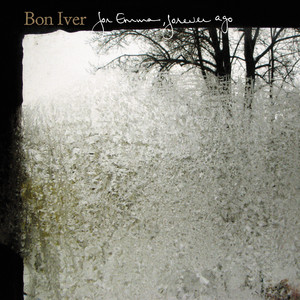
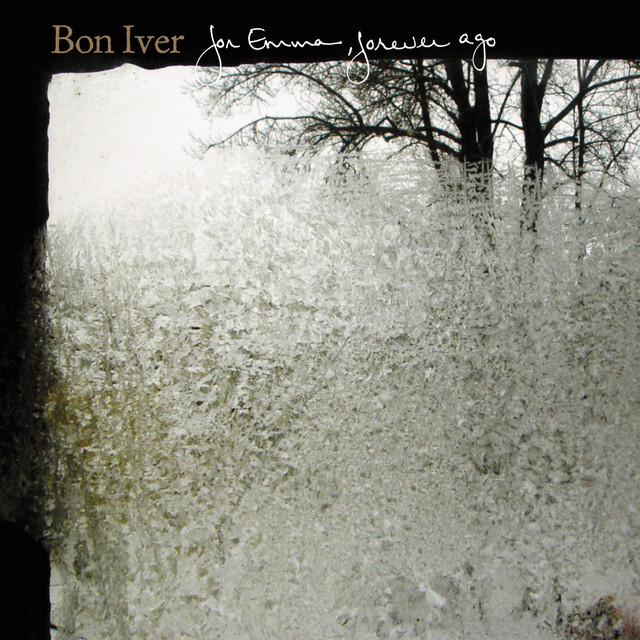
That’s not a romantic origin story added later. Justin Vernon had just gone through a breakup, a band dissolution, and a bout of illness that left him hollowed out enough that going into the woods felt less like a retreat and more like a disappearance. Three months in that cabin, and the last song on the record that came out of it is “re: Stacks,” which closes For Emma, Forever Ago the way a door closes at the end of a long night — not a slam, not a relief, just a quiet and final sound.
The guitar is fingerpicked, open-tuned, detuned, and the recording sounds like where it was made — the room breathes in the track, the air is part of the instrument. No band. Barely a production. Just a man and a guitar and a voice that sounds like it spent the winter being scraped down to something essential. And the voice is different here from everything else on the record: the falsetto Vernon uses across For Emma is a kind of armor — beautiful armor, but armor — and on “re: Stacks” he comes down from it. He sings closer to the chest, lower, so the song feels like something private being said plainly rather than something beautiful being performed.
“This is not the sound of a new man or crispy realization.”
He says that right near the start, and it’s one of the braver lines on the record because it refuses the arc the listener wants. You’re in a cabin, you’ve been through the fire, you’ve come out the other side — and he stops you right there and says no. Not that. Something smaller. Something truer.
Even the title is about what’s left rather than what’s next. Vernon has talked about “stacks” as a poker term — the chips in front of you, what you’re playing with, what you’ve got left. The “re:” is email syntax, a reply, a letter written back. So the title, read one way, is: regarding what you have left. The song takes all of its six minutes and forty-one seconds to answer that, moving through images that aren’t quite narrative — more like objects left on a table. A dress. A bed. Doing right. Digging a ditch. “Your eyes, they tied me.” The connective tissue is feeling, not story, and somehow that makes the feeling more specific rather than less. You don’t need to know the circumstances of Vernon’s winter to understand what the song is carrying. The weight is in the tuning, the room, the way he says certain words like they cost something.
“I’m in love with your honor, I’m in love with your cheeks.”
That line lands every time. Not because it’s poetic — it’s almost awkward, anatomical in a way that shouldn’t work — but because it sounds exactly like something you’d say at the end of something long, when the formal language has given out and all you have left is the specific. The honor. The cheeks. Not the idea of the person. The actual person. The song keeps doing that — refusing to generalize its own grief into something easier to carry. It stays particular. It stays in the room.
The record was mixed and finished by early 2007 and initially self-released: Vernon pressed something like 500 physical copies, mailed them to people, left them places. It found its way, the way certain things find their way when they’re true enough, and by 2008 it had a proper release through Jagjaguwar — by which point the cabin myth was already in circulation, already becoming the kind of story that sometimes swallows the music. It didn’t, this time. Most records that get mythologized for the suffering behind them end up listened to as biography rather than sound; For Emma somehow stayed both. The story is real, and the songs are real, and “re: Stacks” doesn’t need you to know anything about Wisconsin to knock you flat.
Vernon didn’t emerge from that cabin fixed. He emerged having done something with the wreckage — not a new self, not a crispy realization, just a record, the stacks in front of him after everything was said and done. And the last two minutes of its last song are almost wordless. The guitar continues. The voice comes in and out. Nothing resolves — no final epiphany, no earned peace, no major chord to walk out on. The song ends quietly, almost mid-thought, and the record ends with it.