Towers
Justin Vernon wrote "Towers" in a cabin in Wisconsin in the winter of 2007, alone, after the band he'd been in fell apart and his health got bad and his relationship ended more or
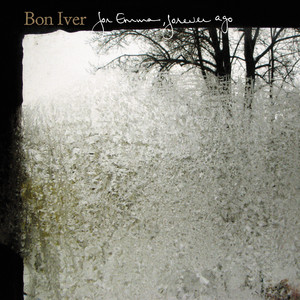
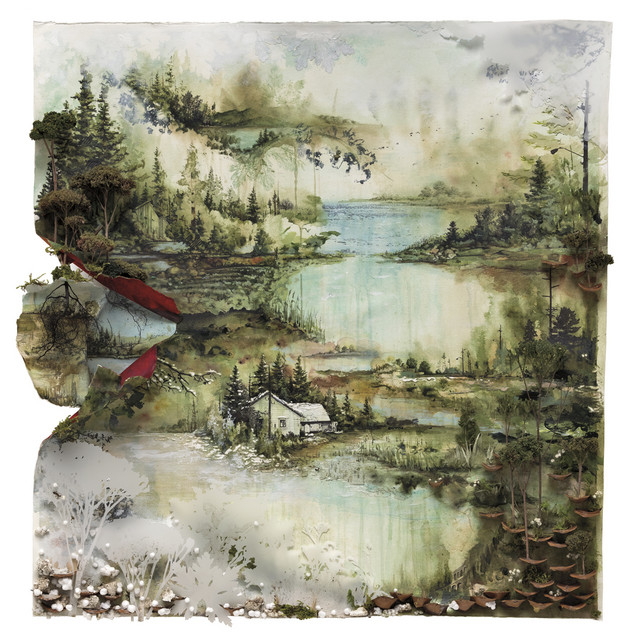
Justin Vernon wrote “Towers” in a cabin in Wisconsin in the winter of 2007, alone, after the band he’d been in fell apart and his health got bad and his relationship ended more or less simultaneously. He went north to hunt and heal and somehow walked out with eleven songs. The album those songs became — the first one, For Emma, Forever Ago — put him on a map he hadn’t asked to be on. By the time he made the second album, the one just called Bon Iver, Bon Iver, he had a band, a studio in Eau Claire, a world paying attention. “Towers” is the song on that record that sounds most like a man trying to remember what it felt like to be alone in the woods with nothing to prove.
The second album came out in 2011. Vernon recorded it at April Base, the studio he built himself in a converted veterinary clinic outside Eau Claire — a different kind of isolation from the cabin, chosen rather than collapsed into, with people he trusted in the next room. The songs sprawl. The arrangements are enormous: choirs and horns and layers of vocal processing, the sound of a man who had spent three years being told his voice was the whole instrument discovering he could also build a room for it to live in.
“Towers” is three minutes and eight seconds, and it is the quietest room on the record.
There’s a guitar figure that opens it — fingerpicked, patient, the kind of part that sounds like it was found rather than written. Rob Moose played strings on the record, and they come in on “Towers” like weather moving in from the north: not dramatic, just a change in the air. Vernon’s vocal sits close to the microphone, intimate in a way that’s almost uncomfortable given how public his life had become by then. He isn’t reaching. He’s just saying it.
“I’ll be locking you inside, towers don’t come free.”
The lyrics on this album are deliberately fractured — Vernon has talked about them as something between poetry and phonetics, syllables chosen partly for how they sit in the mouth before they’re chosen for what they mean. Some listeners find that infuriating. But “Towers” is one of the places where the images land even if you can’t paraphrase them. There’s height in it. There’s something built and something imprisoned and something about the cost of building. You don’t have to decode it. It lands on the body before the mind gets there.
Vernon spent years after For Emma being held up as the archetype of a certain kind of wounded authenticity — the heartbreak cabin, the beard, the grief turned into beauty. He was twenty-six when he recorded that first album, and by the time the second one came out he was thirty. Not old. But old enough to know that the story people were telling about him wasn’t quite his story, that the cabin had become a myth and the myth had become a box.
The second album pushes against the box without ever seeming to argue with it. It just expands. “Towers” doesn’t sound like a man who has moved on from heartbreak. It sounds like a man who has built something larger around it, who has learned to live in the same house with it without letting it run the lights.
The band on this record — Mike Noyce, Sean Carey, Matthew McCaughan — they’re not a backing band. They’re the reason the architecture holds. Carey’s drumming on the album is some of the most restrained playing on any record of that decade, every hit chosen like it costs something. On “Towers” the percussion is barely there, just enough to keep the song from floating free of the earth. That choice is as important as anything Vernon sings. You can feel the decision to hold back.
The album closes with “Beth/Rest,” which divided people — synthesizers, saxophones, something that sounds like an adult contemporary radio station circa 1987 and means it completely. Vernon leaned into the uncool thing as hard as he could and it polarized everyone who had decided what Bon Iver was supposed to be. But “Towers” sits near the front of the record, before any of that friction, and it asks the simplest question the album has: what do you build when you’re building for keeps, and what does it cost to keep something locked inside it?
He never quite answers it. The song ends the way the guitar began — patient, open, a figure that resolves without announcing itself. The strings hold for a moment and then let go.
Some structures are meant to stand. Some are meant to be walked out of when the winter ends. Vernon has spent the years since building bigger and stranger things, and the cabin is still part of the mythology, and “Towers” is still the place on the second record where you can hear him deciding which one he wants to be.