Wanted Dead or Alive
Jon Bon Jovi came up with the opening riff sitting alone in a tour bus somewhere in the American Southwest, watching the highway unspool through the window at three in the morning.
Jon Bon Jovi came up with the opening riff sitting alone in a tour bus somewhere in the American Southwest, watching the highway unspool through the window at three in the morning.
That’s where the song lives, really — not on a stage, not on a record, but in that window. The mile markers going by. The dark out there. The question of whether you’re running toward something or away from it, and whether there’s a difference anymore.
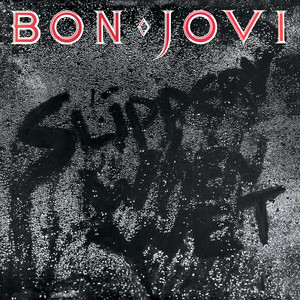
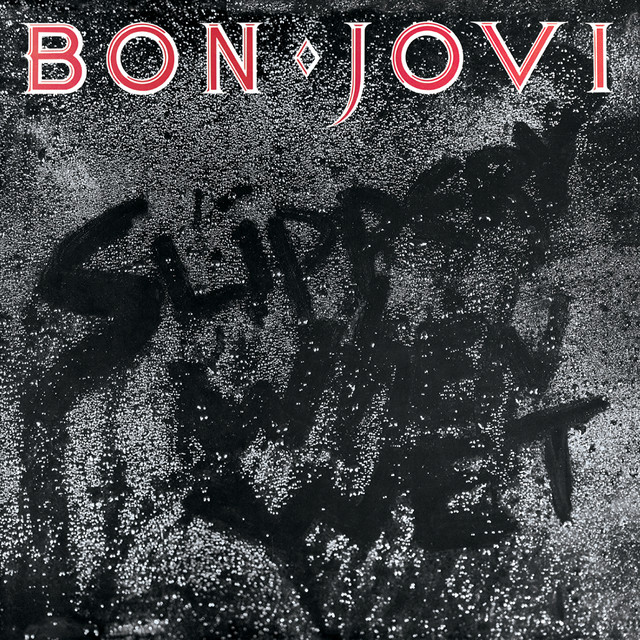
“Wanted Dead or Alive” came out in 1986 on Slippery When Wet, which was the record that turned Bon Jovi from a mid-tier New Jersey arena act into something that filled stadiums on multiple continents. But the song itself is about what that costs. Richie Sambora’s twelve-string acoustic opens it like a door creaking in a wind — that arpeggiated descent is one of the most recognizable six seconds in rock — and then the song just walks inside and sits down and tells you what it’s actually like to do this job. Not the part they put in the magazine. The other part.
“I’m a cowboy, on a steel horse I ride.”
That’s not a boast. That’s a man reaching for the nearest mythology big enough to explain the feeling — the American road, the lone rider, the frontier that keeps moving further west no matter how fast you go. The cowboy works because it’s honest. You’re not home. You’ve been not home so long you’re not sure home is still the thing you remember. The people you started with are still with you, and you’ve seen things together that nobody else would understand, and the city you wake up in this morning is different from the one you woke up in yesterday.
They had been touring for what felt like forever by the time the song was written. The Slippery When Wet cycle ran more than two hundred dates. Two hundred nights of the same set, different skylines, the same hotel room reproduced in different cities like a copy machine that can’t change the template. Tico Torres behind the kit. Alec John Such on bass. David Bryan on the keys. Sambora working the crowd from the right side of the stage. And Jon out front, every night, delivering it like it meant something — because it did mean something, and also because even if some nights it didn’t, the people in the seats had paid for it and they deserved it.
That’s the tension the song doesn’t resolve. It loves this life and it’s exhausted by this life simultaneously, and it doesn’t try to pick a side. “Sometimes I sleep, sometimes it’s not for days.” Not romanticized. Not complained about. Just stated.
Sambora’s guitar solo in the middle is the emotional center of the song — not the big electric moments, but the acoustic filigree underneath everything, which he holds almost constant through five minutes without ever losing the thread. He was one of the best rhythm players of his generation and the song is built around that steadiness. The lead vocal gets the glory, but the guitar is the thing keeping the song on the road.
Bruce Springsteen gets cited whenever people talk about this song, and the comparison is fair — the New Jersey lineage, the big-tent rock, the mythology of the highway — but the feeling is different. Springsteen’s road is social, populated, tangled up in class and longing and the texture of other people’s lives. Bon Jovi’s road here is solitary. The people around you are your people, your crew, your band, but the loneliness is structural. You signed up for it. You chose it over something else. And every mile out adds another mile home.
“I’ve seen a million faces and I’ve rocked them all.”
There’s something plain and true in that line. It’s not humility and it’s not bragging. It’s a ledger entry. The millions of faces are real — Bon Jovi was playing for massive crowds by 1986 — but the line works because it catches the paradox. A million faces is a million nights of connection and every one of those nights ends with the bus back to nowhere in particular. You can move a crowd and still go to sleep alone in a town whose name you had to check the itinerary to remember.
The song has outlasted the era it came from by a considerable distance. “Wanted Dead or Alive” survived the nineties, when that kind of big-stadium rock was considered unfashionable, and survived into an age when both Bon Jovi and the road life it describes are regarded as genuinely classic — not because the song is nostalgic but because the longing in it is durable. Anyone who has chosen a life that requires constant motion knows the exact register of that ache. The job you love and the home you left for it. The steel horse. The window at three in the morning.
The highway keeps going. You keep watching. That’s what you signed up for. That’s what you keep signing up for, night after night, and you wouldn’t trade it, and some nights you would trade it for anything, and neither of those facts cancels the other out.
That’s the whole song. Five minutes and eight seconds of the American road staring back at you, and no resolution in sight, and the next city coming up on the left.