Sloe Gin
Jon Lord wrote it. He lived three more years and got to hear what Bonamassa did with it.
Eight minutes and eighteen seconds of slow blues, and none of it is indulgence. I know how that sounds — an eight-minute guitar feature usually is exactly that. But in blues, the length is the form. The form requires time. It requires you to sit inside the thing, let it breathe, go out and come back and go further out before you let it rest.
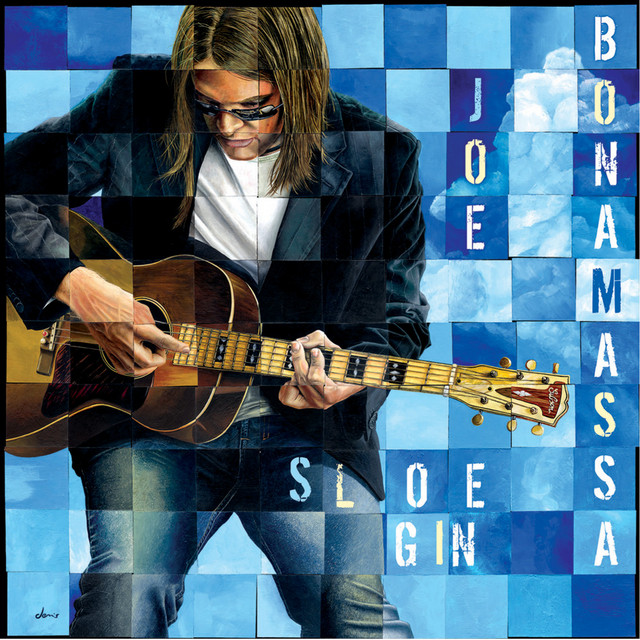
Joe Bonamassa recorded this version live at Royal Albert Hall in 2009, and he used every second of it. About thirty seconds in, the room goes still — not because anything loud happens, but because something slow does. The piano lays the foundation down carefully, like a man setting a glass on a table so he doesn’t spill a drop. Then Bonamassa opens his mouth and you know what kind of night this is going to be.
The song wasn’t his to begin with. Jon Lord wrote it — the Hammond organ architect of Deep Purple, who spent his last years turning in a different direction entirely. He put it on his 2003 solo record Beyond the Notes, a quiet corner of a very loud career that most people never found. It’s a breakup song, technically. But that label is too small for it.
The lyric is plain on the page. Sloe gin, slow burn, waiting for something to happen. A drink that goes down smooth and hits you later. The slow-motion collapse of something that used to be a life. Lord was writing about loss the way people write about it once they’re old enough to know that loss doesn’t arrive with sirens. It arrives the way sloe gin does. While you weren’t paying attention.
Bonamassa had been playing since he was twelve, opening for B.B. King at twelve, putting out records in his twenties that the blues press admired and the general public walked past. He was a player’s player — the kind of guitarist other guitarists knew about, that session guys talked about, that Clapton had noticed. The mainstream kept its distance, the way it does with people doing something real without the packaging to match.
Royal Albert Hall was a turning point. Not a manufactured one. No rebranding, no pop producer, no pivot. A thirty-two-year-old man who had been working for two decades walked onto one of the great stages in the world and played like he had something to prove and like he already knew he’d proved it.
Around the five-minute mark the guitar starts doing what the vocal can’t. It stops asking the questions the lyrics asked and starts living with the lack of answers. Bonamassa plays phrases that don’t resolve, that hang in the air of that enormous hall, and then he pushes harder, and harder still. Royal Albert Hall — a room built for orchestras and decorum and people who know which fork to use — opens up and takes it. The audience goes quiet in that specific way audiences go quiet when they aren’t sure they should breathe.
The band doesn’t chase him. Bogie Bowles on drums, Carmine Rojas on bass, Rick Melick on keys — they hold the ground. That’s the job. That’s what session players do when a guitarist is out on the wire. They don’t follow. They wait, and they’re exactly where you need them when you come back.
Jon Lord died in 2012, three years after this recording. Kidney cancer. He was seventy-one. He’d spent his whole life making noise with bands and his last decade making something much quieter, looking for the part of music that had nothing to do with volume. He wrote “Sloe Gin” somewhere in the middle of that search.
He got to hear what Bonamassa did with it. I hope someone played it for him in the right room, on a night when the light was coming in at the right angle. Because what Bonamassa did was take a song about slow loss and turn it into evidence that some things survive the losing. The song itself is a thing you still have, even when everything else is gone.
Sloe gin, slow burn.
Lord wrote it, and he was still here to hear it come back to him bigger than he sent it out.