Hold On
*Hold on for one more day.* That line is doing more work than it looks like.
Hold on for one more day.
That line is doing more work than it looks like. It’s not asking you to fix anything. It’s not promising the problem goes away. One more day is the whole ask — just don’t stop today — and there’s a reason that’s enough to make grown adults cry in grocery stores when it comes over the speakers.
The song came out in the spring of 1990, and it hit number one for two weeks, which is the kind of fact that usually tells you very little. What it doesn’t tell you is who was in the room when it was written — or what those people were carrying.
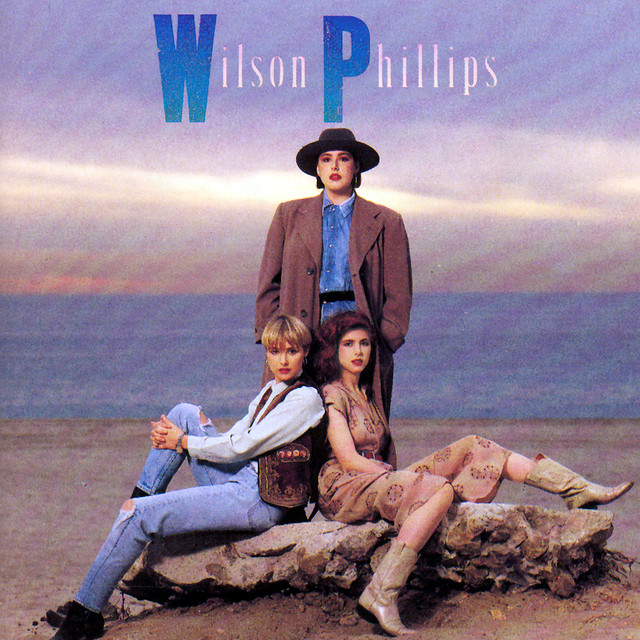
Carnie Wilson and Wendy Wilson are Brian Wilson’s daughters. Their father built some of the most elaborate pop architecture of the twentieth century and then disappeared into it — the breakdowns, the years lost to agoraphobia and medication, the way he was managed and medicated and kept from his own work for nearly a decade. They grew up watching that. Not from a distance. Up close, in the same house, daughters of the man who couldn’t quite stay in the world. And their bandmate Chynna Phillips was John Phillips’s daughter — a man who by the time Chynna was old enough to understand it, had put himself mostly beyond reach too.
These were not people who had been told, by their lives, that holding on would be enough. They had watched holding on fail. They had watched people they loved let go of the rope, and they knew exactly what that looked like from the watching end.
Glen Ballard co-wrote the song with Chynna Phillips and produced the record. This is the same Glen Ballard who would produce Alanis Morissette’s Jagged Little Pill a few years later — a man with a gift for finding the emotional center of what a singer needs to say and building a frame around it that doesn’t get in the way. The production here is clean almost to the point of plainness, which is exactly right. There’s nowhere to hide in this song, and it doesn’t try to hide.
What makes it work is something more specific than three good voices, though three good voices help. It’s the way the harmonies are distributed. Carnie carries the verses mostly alone, which keeps them at ground level — someone talking to you, not performing at you. The chorus opens up into all three, but even then it doesn’t ascend into triumph. It holds. The word hold is right there in how the song physically functions. The voices brace each other.
Things’ll go your way, if you hold on for one more day. Not things will be fine. Not things will be great. Your way — meaning the version of things you need, not the version someone else decided was good enough for you. And even that promise is hedged: things’ll go your way. Someday. Maybe. But today is not the day to find out.
The song doesn’t tell you what’s on the other side of holding on. It doesn’t know. That’s the honest thing about it.
People who grew up in the nineties sometimes apologize for loving this song, as if it’s too obvious, too radio-clean, too earnestly helpful to be taken seriously. But the apology is its own kind of proof. You only feel the need to apologize for something that got to you. The song got to people. It gets to people still, because the situation it describes — standing in a moment where you genuinely cannot see any reason to stay — doesn’t go away between decades. The years change. The song stays useful.
Brian Wilson eventually came back. Not the same, not fully — you don’t get back everything that gets taken by the years of damage — but back enough to work, back enough to finish Smile in 2004, back enough to be there. His daughters watched him hold on and make it through to something.
Play it now and the shape of it is still there: Carnie alone in the verse, close and level, like someone talking to you across a kitchen table. Wendy and Chynna come in under the chorus and the line stops belonging to one person. Nobody rises above anybody. The three of them stay level with each other and hold the last of it out until the song lets go, and whoever is standing in the grocery store aisle with a cart half full stays put and lets it finish.