Bitter Sweet Symphony
The sample loop runs for five minutes and fifty-eight seconds and Richard Ashcroft owns none of it.
The sample loop runs for five minutes and fifty-eight seconds and Richard Ashcroft owns none of it.
That’s the fact you have to sit with before you can hear the song clearly. The Rolling Stones’ music publisher — ABKCO, Allen Klein’s company — took one hundred percent of the songwriting royalties after the song came out. Not a portion. All of it. Because The Verve had licensed a sample from an Andrew Oldham Orchestra string arrangement of “The Last Time,” and when “Bitter Sweet Symphony” became one of the biggest songs of 1997, Klein decided the sample exceeded the terms of the deal and moved to collect everything. Mick Jagger and Keith Richards were added as songwriters. Ashcroft and the band lost the publishing on a song that was indisputably theirs — the lyrics, the structure, the ideas, the whole thing — and kept only the performer royalties.
It took twenty-three years to fix. In 2019, Jagger and Richards signed the rights back to Ashcroft. No lawsuits, no settlement. They just gave it back. Ashcroft said they deserved the credit for making it right. It was a quiet ending to a story that had run long enough to become its own kind of wound.
The string loop came from an album David Axelrod arranged in 1965 — the Andrew Loog Oldham Orchestra’s The Rolling Stones Songbook, a collection of lush instrumental versions of early Stones material. The sample that producer Youth and The Verve built the track from is six bars of those strings, looped and layered into something hypnotic and slow-burning, the way certain pieces of music seem to breathe on their own. Youth — Martin Glover, who had been the bassist in Killing Joke and became one of the quieter architects of British alternative in the nineties — helped lock in the loop with Nick McCabe’s guitar work and a rhythm track that sits just behind the beat in a way that makes the whole thing feel like it’s drifting forward without effort.
What Ashcroft put on top of that loop is a different kind of achievement entirely. The verses don’t explain themselves. They go straight at the hardest thing to say plainly — that you’re shaped by forces you didn’t choose and can’t escape, that you try and you fail and you try again, that the trying is both the problem and the only answer.
“I’m a million different people from one day to the next.”
He’s not apologizing for it. He’s not celebrating it. He’s reporting it. The line sounds like someone who has worn himself out being surprised by his own contradictions and has finally stopped being surprised. Just filed the observation and kept walking.
The video is the song made visible, and for once that’s not a figure of speech. Mark Kozelek never walked a street like this; Ashcroft walks the street at people, a straight line through the crowd, no deflection, a man moving through the world as if he has decided that the world will have to move around him. He shoulder-checks an old woman. He clips a suited man. He doesn’t look back. The camera stays on him in a long, unbroken Steadicam shot that took forty-three takes to get right — Ashcroft walked that block in Hoxton until his feet were raw, until the extras stopped being extras and started being just people on a street, until the shot started to feel less like choreography and more like documentation.
That obstinacy is in the song too. It refuses to resolve. The melody keeps rising toward something and the loop keeps pulling it back to the same place, and after five minutes and fifty-eight seconds you’re right where you started — which is exactly where Ashcroft said you’d be.
“‘Cause it’s a bitter sweet symphony, this life.”
Not bitter, not sweet. Both. At the same time. Which is the only honest answer but also the hardest one to hold.
Urban Hymns sold eleven million copies. “Bitter Sweet Symphony” peaked at number two in the UK, blocked from the top by Puff Daddy’s Diana Ross sample — itself a monument to the era’s complicated relationship with borrowed music. The irony is its own kind of dark comedy, but Ashcroft never seemed interested in playing it for laughs. He had other things to carry.
The Verve broke up the year after the album came out, then reunited, then broke up again. The version of the band that made Urban Hymns was a specific set of people in a specific room at a specific moment, and that moment didn’t last, which is how it always goes. McCabe’s guitar, Simon Jones’s bass holding the bottom of that loop steady, Peter Salisbury’s drumming locked in underneath — they were all there for it and all gone from it before the decade was out.
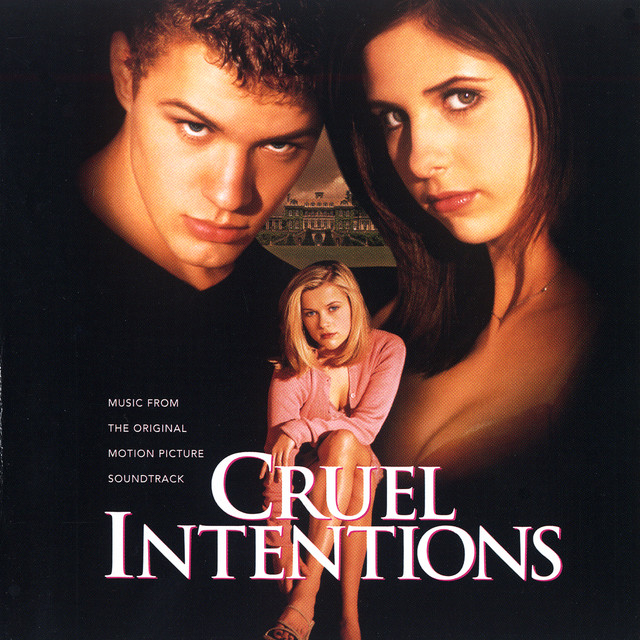
But the song kept moving. It turned up in Cruel Intentions, in NFL pregame shows, in the kind of cultural spaces that swallow songs whole and sometimes give them back changed and sometimes don’t. What’s strange is that “Bitter Sweet Symphony” survived all of it. The strings are too good. The loop is too patient. Ashcroft’s vocal is too earnest in the specific way that earnestness becomes armor — he means every word so completely that you can’t use the song ironically, can’t place it at a remove, can’t make it a joke.
He walks that block and keeps walking.
In 2019, after Jagger and Richards returned the publishing, Ashcroft performed the song at the Brit Awards and dedicated it to the Rolling Stones. He stood at the microphone and played it straight, same as always. No ceremony, no score-settling. Just the loop and the strings and the voice and the street.
The song had spent twenty-two years registered under someone else’s name, and then it came home. Ashcroft had been performing it that whole time anyway — singing words he wrote about his own life on stages all over the world and watching the money land in someone else’s account. If that changed how the song felt to sing, he never said so publicly. Maybe it didn’t. Maybe the song was always fully his in the way that matters, and the paperwork was just paperwork.
Or maybe that’s the bitter sweet right there — that you can make something true and permanent and yours and still have someone hold the title to it for twenty-two years. That the world will move around you when you walk the street, but the street still sets the terms.
‘Cause it’s a bitter sweet symphony, this life.
He got it back.